Your Website Should Be Helping Your Business, Not Holding It Back
A lot of small businesses are better than their websites make them seem.
They do good work. They care about their customers. They answer the phone, solve problems, show up on time, and actually deliver.
But then someone visits their website and the impression does not match the business.
Maybe the site feels outdated. Maybe the services are hard to understand. Maybe the layout is cluttered, the photos feel random, or the contact form is buried somewhere it should not be.
Maybe the business looks smaller, less polished, or less trustworthy online than it actually is in real life.
Before someone calls, books, fills out a form, or asks for a quote, they are probably checking your website.
And whether it is fair or not, they are making assumptions fast.
They are asking themselves:
- Do they look professional?
- Do I understand what they offer?
- Can I trust them?
- Do they seem active?
- Is this business still around?
- Will this be easy?
A website does not need to be flashy to answer those questions well. It just needs to feel clear, current, and intentional.
A good website should help people understand what you do without making them dig for it. It should guide them toward the next step. It should make your business feel credible before a conversation even starts.
That does not mean every small business needs a giant custom website with every feature imaginable. Sometimes the best website is simple.
A strong homepage. Clear service pages. Real photos. Easy navigation. A contact button that does not make people hunt. Words that sound like a human wrote them. A layout that feels clean on both desktop and mobile.
The basics matter more than people think.
Because a messy website creates friction.
If someone has to work too hard to understand what you do, they may leave. If the site feels outdated, they may wonder if the business is outdated too. If the mobile version is hard to use, they may never make it to the contact form.
And if the copy is vague, they may not realize you are exactly what they needed.
Your website can quietly undercut the quality of everything you have worked so hard to build.
That is the frustrating part.
Your business might be strong. Your customer service might be great. Your work might be worth every dollar.
But if your website does not communicate that, people may never get far enough to find out.
Want to audit your site before you redesign it?
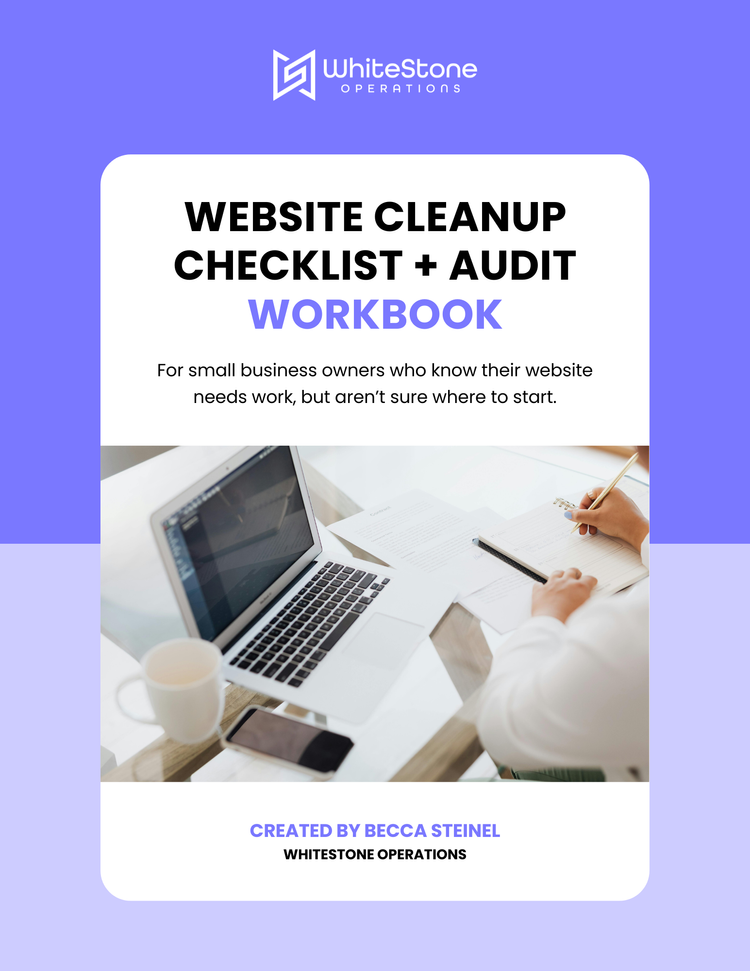
Use the Website Cleanup Checklist + Audit Workbook to review your homepage, mobile experience, navigation, calls-to-action, trust signals, copy clarity, and basic SEO so you know what to fix first.
A strong website should do more than exist.
It should support the business.
It should make the first impression easier. It should answer the obvious questions. It should help people take action. It should feel like a natural extension of the business, not something that was made years ago and forgotten.
A strong website gives people confidence. It tells them they are in the right place. It makes the business feel organized, trustworthy, and ready.
And sometimes, that is the difference between someone clicking away and someone reaching out.
Your website does not need to be perfect. But it should be working for you.
It should make your business look as good, as clear, and as capable as it actually is.
Talk about your website →